New home essentials for a first apartment or new place
Buy the missing basics for sleeping, washing, eating, lighting and cleanup first. Bring usable belongings, include essential work, accessibility and personal-care equipment, and postpone upgrades until your routine and available space justify them.
Choose your situation
- Starting with little equipment? Secure a usable sleep setup and daily consumables first. Identify the immediate gaps.
- Bringing belongings or accepting hand-me-downs? Confirm what is available before buying replacements. Build one inventory.
- Equipping a kitchen on a limited budget? Choose equipment for actual meals and basic cleanup. Start with those functions.
How to prioritize what to buy first
Think through the first evening: where will you sleep, what will you wash with, how will you eat, and what will you use to clear up? Add the purchases needed to make those activities possible with what you already own. Your starting setup can improve later; it does not need a complete furniture collection.
What can you bring or reuse?
Mark what is already available before shopping.
Put usable belongings, included appliances and storage, confirmed hand-me-downs and agreed shared equipment on the same inventory. If sharing, agree who brings each item. A possible offer should remain unconfirmed until you know the item is available.
Work through each function before comparing products. For sleep, identify the arrangement and the bedding that fits it. For meals, check what you can prepare, serve and wash up with. Then check washing, lighting and cleanup. This exposes a missing part of an otherwise usable setup without turning the whole room into a shopping project.
Beside each available item, note whether you are bringing it, it is included, or someone has confirmed it for you. Keep an unresolved offer visible as a question. If that item is needed immediately, confirm the arrangement before treating the gap as filled.
How do you equip a home on a small starting budget?
Use the path for each proposed purchase, including small supplies. Start with confirmed availability, then ask whether the missing item serves an immediate need.
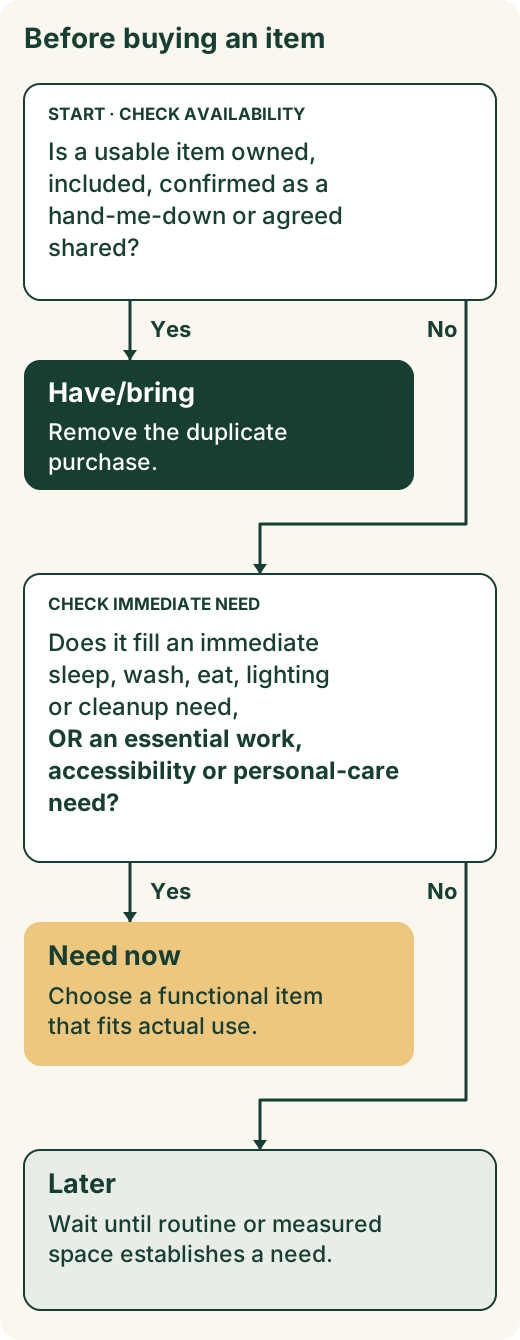
The first Yes ends at Have/bring: a usable available item removes a duplicate purchase. The second Yes includes essential work, accessibility and personal care as well as the everyday basics. Those needs belong in Need now even when a generic apartment list overlooks them.
Assign the decision before choosing brands or matching sets. Record it in the printable essentials list. Compare all remaining immediate gaps before spending the available budget on upgrades.
Kitchen and cleaning basics
Which meals does your kitchen need to handle?
Write down meals you actually prepare. Compare their equipment needs with the stove and compatible cookware already available. Buy for those meals first; a large set may contain pieces you have no reason to use.
- Prepare and cook: a suitable pot or pan, knife, cutting board, cooking utensil and oven mitt.
- Eat and drink: dishes, cups or glasses, and cutlery in quantities suited to your household.
- Open and store food: a can opener when the food needs one; containers when you will store leftovers or prepared food.
- Wash up: dish soap, a sponge or brush, and a dish towel or drying rack as needed.
An appliance takes over the counter
Before buying a countertop appliance, identify its everyday use and measure the intended location. If the fit is unknown, leave the choice in Later. The use-and-fit comparison shows the coffee-maker case alongside other purchases whose priority changed with the routine or space. Keep earlier purchases visible on the inventory while collecting kitchen supplies.
Which supplies cover everyday cleanup?
Start with suitable soap or detergent, reusable cloths, an appropriate brush or sponge, and trash bags. Add floor-cleaning tools for your flooring, such as a broom, mop or vacuum. Choose products for the actual surfaces; follow both surface-care and product instructions.
Washington Department of Health cleaning guidance supports a small soap-and-water cleaning setup. Follow product labels, including recommended protection, and choose suitable products for each surface. Never mix cleaning products.
Bedroom, bathroom and living essentials
Check the actual setup against these first-night functions. The condition in the right column decides whether an item belongs on your shopping list.
| Function | Bring or buy only where missing |
|---|---|
| Sleep | A usable sleep setup with sheets, pillows and blankets that fit. |
| Wash and use the bathroom | Toilet paper, soap, a towel and the toiletries you use. Curtain/liner, hooks and rod only if the shower needs them. |
| See and work | A lamp or compatible bulb for a lighting gap; a usable work surface and suitable chair if needed for work. |
| Meet personal needs | Essential accessibility and personal-care equipment belongs in Need now when it is not already available. |
The shower row is conditional. An enclosed shower can remove curtain equipment from the buy-list while leaving soap, towels and toiletries as separate decisions. Apply the same item-by-item check to the other rows.
What will make the sleep setup usable?
Match bedding to the bed you will actually use, rather than to a later furniture plan. Quantities should follow the people sleeping there and what they already have.
Existing closet storage may remove a dresser from the buy-list. Add hangers, clothing storage and a laundry container only where the available setup leaves a gap.
What should be ready for the first shower?
Review the supplies you use each morning and evening, then mark the missing ones individually. Confirm the shower setup before choosing any curtain equipment.
Which living-space purchases are immediate?
A lamp or compatible bulb belongs in Need now when available lighting does not meet your needs. A usable work surface and suitable chair also move up the list if you work from home.
Extra seating and side tables can wait when their function is already covered. Accessibility and personal-care needs may change the order.
Tools, safety and household items
Include a plunger and suitable toilet-cleaning tool if absent. Check their availability before crossing them off.
What should you buy, bring or borrow?
A screwdriver with suitable bits and a measuring tape are useful for ordinary household jobs. Borrowing a rarely used larger tool is an option when someone can lend it; buy according to the work you actually have.
A flashlight, suitable spare batteries, a first-aid kit and personal supplies appear in Red Cross preparedness guidance. Add missing items.
What must match existing safety equipment?
Establish what equipment is already supplied before buying duplicates or replacement batteries. Match the purchase to the model and its instructions. USFA smoke-alarm guidance calls for following manufacturer directions and using qualified electricians for hardwired alarm installation.
Record the missing item or the qualified help needed.
What you can wait to buy
Optional appliances, matching sets, decor, organizers and extra furniture can stay in Later until a routine or measured space establishes their use. Essential sleep, work, accessibility and personal-care needs take priority.
Will this item serve a real routine?
Compare the missing check in these separate situations. A purchase may depend on use, available space, or both; its price or appearance does not answer those questions.
Name the task before buying. If a usable item already does it, keep the upgrade in Later. If the task remains awkward, record what is missing before choosing the replacement or addition.
Free furniture still needs to fit
A confirmed offer answers the availability question. You still need a place for the piece and a reason to use it. Record both before accepting it, just as you would before paying for new furniture. For storage, begin with the belongings that need a home, then choose an organizer for that gap.
Revisit Later when the awkward task, available space and existing alternatives are clear. A room can remain visually unfinished while meeting daily needs.
Printable essentials list
Print or copy this shopping record. For each item, mark Have/bring, Need now or Later. Cross out duplicate purchases when the item is already owned, included, confirmed as passed down or agreed shared.
Shop the remaining Need now gaps.
Decision: H = Have/bring; N = Need now; L = Later. Add your own quantity and line cost beside each selected item.
| Items and conditions | H / N / L and quantity | Estimated / actual cost |
|---|---|---|
| Appropriate sleep setup; sheets, pillow and blanket to fit | _____ | _____ / _____ |
| Towels, soap, toiletries and toilet paper | _____ | _____ / _____ |
| Curtain/liner, hooks and rod only if the shower needs them | _____ | _____ / _____ |
| Pot/pan, knife, cutting board, utensil and oven mitt for actual meals | _____ | _____ / _____ |
| Dishes, cups/glasses and cutlery; can opener if needed; food containers if used | _____ | _____ / _____ |
| Dish soap, sponge/brush, dish towel or drying rack | _____ | _____ / _____ |
| Surface-suitable cleaner, cloths, floor tools and trash bags; follow labels, never mix products | _____ | _____ / _____ |
| Hangers, clothing/laundry storage and laundry detergent if needed | _____ | _____ / _____ |
| Lamp/compatible bulb for missing lighting; work surface/chair if needed | _____ | _____ / _____ |
| Plunger, toilet-cleaning tool, screwdriver/bits and measuring tape if absent | _____ | _____ / _____ |
| Flashlight, compatible batteries, first-aid kit and personal supplies | _____ | _____ / _____ |
| Needed alarm replacement/battery per manufacturer directions; qualified electrician for hardwired installation | _____ | _____ / _____ |
| Later options: appliances, extra furniture, decor and organizers after confirming use and fit | _____ | _____ / _____ |
| Other personal needs: __________________ | _____ | _____ / _____ |
| Need now totals | Quantity needed: _____ | Estimated: _____ Actual: _____ |
What should you buy ahead, and how do you keep track?
Known immediate gaps can be bought ahead; measurements and routine-dependent choices can wait. For a purchase whose size matters, note the missing measurement beside it. That keeps an appealing item from becoming a decision you make before knowing whether it fits.
A spreadsheet can mirror the printable decisions and hold your estimates and actual spending. Fill in your own amounts and quantities. Compare the total for Need now separately from Later so optional purchases do not obscure the cost of the immediate gaps.
Treat the grouped rows as reminders, then make an individual decision for each item. Existing dishes might be Have/bring while a missing can opener is Need now. One mark for the whole row would hide that difference.
- Copy each item you are considering onto a separate line in the blank printable shopping record. Keep its condition beside it, especially for shower equipment, appliances and alarm-related purchases.
- Enter the quantity still missing after checking what is available. Estimate the cost of that quantity rather than pricing a complete replacement set.
- Keep Need now and Later totals separate. Add only the relevant line costs to each total; Have/bring items do not create a new purchase cost.
- After acquiring an item, update its status and actual cost on the same record. Check that record before buying another version.
The blank record includes a next-check column for an unresolved measurement or model. Leave that question attached to the item until it is answered. Print additional sheets as needed; keep the conditional inventory above with them.
Keep Later for the next real gap.