Apartment move-in checklist for your first days as a renter
Get access confirmed and record the empty unit before boxes cover the details.
Regulatory text checked .
Confirm key collection, service start dates and building access. Inspect and photograph each empty room, submit the condition record, and request repairs separately. During the first week, follow up on outstanding requests and save the confirmations.
Choose your situation
- Keys in hand? Confirm the unit and handover arrangements, then inspect before unloading.
- Existing damage or no form? Photograph it and send a dated list to management.
- Utilities inactive? Compare the provider confirmation with your start date and contact the responsible provider.
- Condo or building paperwork? Get written instructions and confirmation that documents and reservations are accepted.
- Arriving at a dorm? Follow your school's check-in process and save its condition-report deadline.
- Faults still unresolved? Use saved ticket references to follow up with the responsible contact.
Before you sign and on key day
Compare the written fee schedule, utility responsibilities and promised features with the lease. Ask about discrepancies before committing, including move-in charges or services you thought were included.
Keep the signed lease and payment receipts together.
Confirm the actual unit, who releases the keys, collection time and access before helpers unload. Moving from a distance? Ask management to coordinate an available handover and inspection appointment with unloading. Earlier entry needs agreement.
What should you receive for covered older housing?
For covered pre-1978 rentals, the lessor must provide an approved lead-hazard pamphlet, disclose known lead-based paint or hazards, and supply available relevant records before you become obligated under the lease. Check the required lease warning, disclosures and acknowledgments before signing.
The rule sets the timing as before the purchaser or lessee is obligated under any contract
. Obtain the covered-rental disclosures before committing to the lease.
Check the transaction exemptions and target-housing definition. Exempt rentals include those certified lead-free under the rule, leases of 100 days or less that cannot renew or extend, and renewals where required information was already disclosed and no new information has arisen. Zero-bedroom dwellings, including studios and dormitory housing, and elderly or disability housing are excluded unless a child under six resides or is expected to reside there.
This disclosure provision itself requires no new evaluation or abatement. The federal ten-day evaluation opportunity concerns purchasers, not renters.
What does your school require at check-in?
Obtain your current room assignment, pre-check-in steps, check-in location and ID requirements. The check-in station may differ from your residence. Confirm when access begins and how to submit the room-condition report.
Save your school's reporting deadline before arrival.
Documenting the unit's condition
Inspect while the unit is empty.
Complete one room before moving to the next. Work around its walls in the same direction, then cover the ceiling and floor. Open accessible cabinets and drawers; look inside supplied appliances. Record each observation by room and item so a later comparison has a clear location.
| Area | Check and record |
|---|---|
| Doors and windows | Opening, closing, locks and visible damage. |
| Surfaces and storage | Marks, stains, damaged flooring, cabinet interiors and missing supplied parts. |
| Kitchen and bathroom | Ordinary appliance functions, hot and cold water, drainage and toilet flushing. |
| Safety devices | Presence and checks following device instructions and building procedures; faults needing help. |
For a slow drain, record what happened and where. Leave the diagnosis to maintenance. Request help for safety faults; avoid moving heavy connected appliances or attempting electrical repairs.
Which photos make the record useful?
Pair dated room overviews with still close-ups of existing marks and broken items. An overview locates the item; a close-up shows its condition. Add stills even if you also record a walkthrough video, which can miss small defects.
Keep the original files and clear filenames with your written notes.
Where do the report and repair request go?
Complete the building, lease or school condition form through its stated route and deadline. Retain your submitted copy and ask for acknowledgment. Use the designated maintenance process for repairs and save that ticket separately.
Use this worksheet alongside the official form to connect observations with photos. Replace the bracketed entries with your records; copy the full note below.
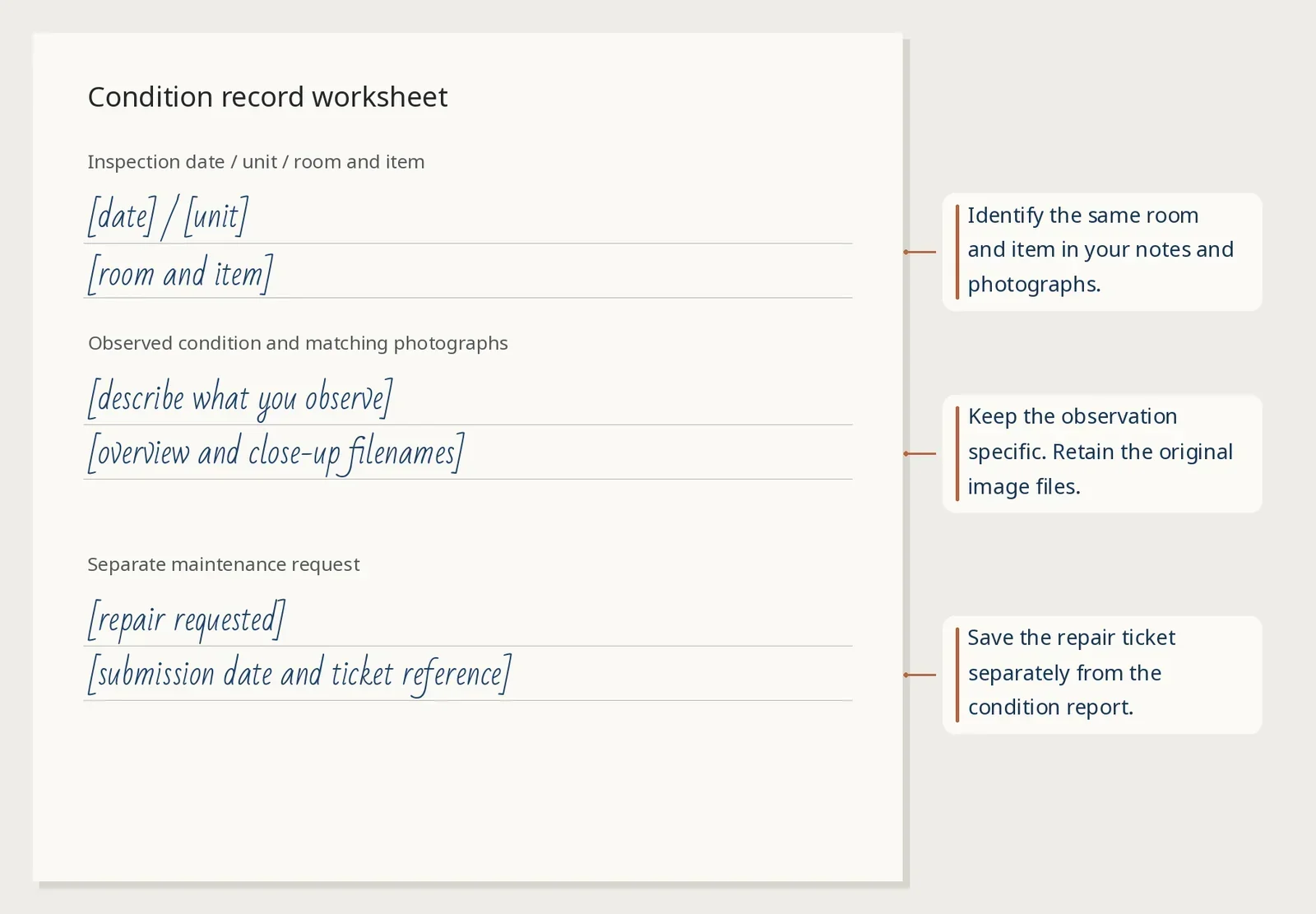
Inspection date: [date]
Unit: [unit identifier]
Room and item: [location]
Observed condition before unpacking: [description]
Photo filenames: [files]
Condition report submitted via: [route] on [date]
Acknowledgment requested from: [contact]

Repair requested for: [specific fault]
Maintenance ticket/reference: [reference]
The repair fields keep the requested action visible. A saved condition report records what you found; check separately that the repair request reached maintenance.
What if the form or office reply is missing?
Setting up utilities, internet and renters insurance
Ask management which services are included, billed through the building or require your own account. Confirm the exact unit and service start date with each responsible provider; retain the confirmation.
Use the lease and management's answers to complete this service check before contacting providers:
| Service | Question to resolve | Record to keep |
|---|---|---|
| Electricity and gas | Which applicable services require your own account? | Provider, unit and confirmed start date. |
| Water and sewer | Included, building-billed or separately arranged? | Written responsibility and any setup confirmation. |
| Trash | Does the building arrange collection and billing? | Management's instructions and applicable charges. |
| Internet | Included access or a separate provider appointment? | Equipment, appointment and access details. |
If water is building-billed, record that answer instead of opening an unnecessary provider account. For services you must arrange, use the confirmed dates to coordinate handover.
What if a service is inactive?
Compare the provider confirmation with your requested date and building handover conditions. Check the unit, account responsibility and any outstanding setup step. Contact the responsible provider and management; retain a revised confirmation or a clear explanation of what remains to be done.
Will internet be ready when you need it?
Check address-specific availability before key day when possible. Confirm equipment, installation appointments and access with the provider and building.
Which insurance details need confirming?
Check the insured address, effective date and any lease requirement for proof. Ask your insurer or agent about these three coverage areas:
- Personal property: which belongings and events are covered, with what limits?
- Personal liability: what liability protection and legal-cost coverage apply?
- Additional living expenses: which extra costs qualify if a covered loss makes temporary relocation necessary?
Confirm exclusions and your deductible. Ask whether belongings settle at replacement cost or a depreciated amount, and what conditions apply to payment. Treat flood coverage as a separate question; coverage for some water damage does not mean every water loss is covered.
For a student in a dorm or apartment, ask the existing family insurer whether that student, residence and property qualify for coverage and what limits apply. Use those answers to decide whether a separate policy is needed.
Save the answers with your policy confirmation.
Building rules for COI, elevators and move-in windows
Obtain written instructions for the actual move. For a rented condo, clarify which questions belong to the unit lessor and which require condo management's approval.
Use the building-access procedure to request a certificate of insurance and reserve the elevator, including what to do when documents or booking conditions remain unresolved.
- Confirm allowed hours, truck access and loading arrangements.
- Reserve the required elevator or loading space and ask about protective measures.
- Obtain any vendor insurance requirements, exact wording, recipient details and submission contact.
- Check that management has accepted the documents and access arrangements.
Follow the path for the activity you are arranging. A later delivery needs its own check against the building's instructions.
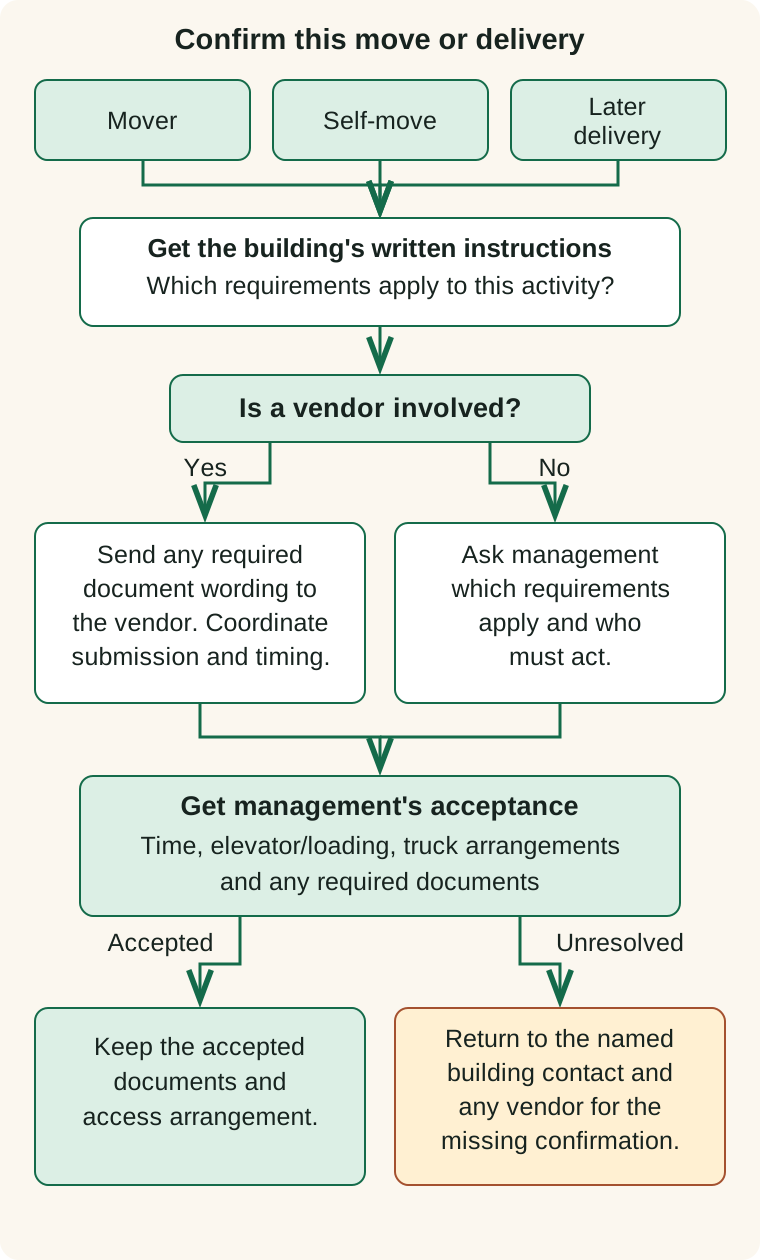
Both branches reach management's acceptance. If documents are submitted but timing is unanswered, use the unresolved branch and ask the named contact what still needs confirmation.
Who supplies and accepts the COI?
A COI is a certificate of insurance. If required, pass the building's instructions to the moving or delivery company's insurance-document contact. Submit through management's stated route and obtain acceptance. Keep it with the reservation.
Keep the vendor's certificate separate from your renters policy, and confirm acceptance with the building.
What about self-moves and later deliveries?
If approval or timing remains unresolved, ask the named building contact and vendor what is outstanding and obtain an approved arrangement.
Change your address and update records
Confirm the precise apartment number or campus mailing address. Submit the appropriate USPS change-of-address request and separately update important senders. Forwarding changes your Postal Service record; it does not update every government, financial or other sender's records.
Start with senders whose next mail you need.
First-week setup priorities
Keep already-needed sleeping, drinking and hygiene items accessible before tackling the remaining boxes.
For missing household basics, use the what to buy first checklist to separate immediate purchases from belongings you can bring and extras you can defer.
Cleaning first? Photograph and record the condition before cleaning or changes obscure it. Request outstanding cleaning or repairs through the building's process, coordinating access when available.
Which open issues still need an answer?
Recheck recorded faults during ordinary use. Follow up on unanswered repair tickets with their references and original observations. Keep the condition record, service confirmations and insurance details together; save emergency and ordinary maintenance contacts.
For each open item, record:
- The observation and original photo or document.
- The responsible provider, insurer, management or housing contact.
- The request date and ticket reference.
- The acknowledgment, outstanding question and confirmed next step.
What remains for a dorm room?
Complete your school's room and roommate process. Save condition-report submissions separately from maintenance requests; the first week is a planning period, not a universal reporting or repair deadline.
Finish by identifying who owes the next answer. Check for acknowledgment or a confirmed next step before marking the item complete.